
Start your Living Professional Record
Begin with one work episode — free.
The Living Professional Record
Build the Source Record Beneath Your Résumé
The résumé is a rendering. The record is the source of truth.
The Living Professional Record helps you capture the work you have actually done, connect it to evidence, turn it into honest professional claims, and render those claims into résumés, LinkedIn profiles, interviews, bios, applications, portfolios, and future AI-mediated representations.
Start with one episode. Build toward a fuller record.
The Record
- Work EpisodeWhat actually happened
- EvidenceWhat supports the claim
- ClaimWhat you can honestly say
- RenderingRésumé, profile, interview, bio
Available now
The guided Record Builder is live as an early working prototype: capture work episodes, connect evidence, build claims, and render outputs from your record.
Open the Record BuilderHave documents, notes, or screenshots already? Try the Automated LPR
How the Living Professional Record works
A concise explanation of how a Living Professional Record preserves evidence beneath a résumé and other professional renderings. Duration: 1 minute 15 seconds.
Why the Record Matters
A résumé is not the person. A job description is not the work. Résumés, LinkedIn profiles, interviews, bios, applications, portfolios, and AI summaries are all renderings — compressed versions created for a specific audience and moment.
The problem begins when those renderings are mistaken for the truth. Each one needs a source layer beneath it: what was done, why it mattered, what evidence supports it, and what context shaped it.
The Living Professional Record is that source layer — durable, portable, and owned by the person who did the work, not locked inside systems they cannot carry forward.
Most résumé and AI tools help polish a rendering. The Record helps decide what should be rendered, for whom, and why.
What the Record Contains
The record is more than a list of jobs. It holds the layers that make your work legible and provable.
Work Episodes
Specific, real moments of work — what happened and what you were responsible for.
Build this layerEvidence
Artifacts, outcomes, metrics, feedback, and systems that support each claim.
Build this layerClaims
What you can now honestly say you built, led, improved, solved, or enabled.
Build this layerRenderings
The outputs drawn from the record — résumés, profiles, bios, and more.
Build this layerPatterns
Repeated strengths, responsibilities, and forms of value seen across episodes.
Build this layerContext
The conditions, constraints, and stakes that let the work be understood fairly.
Build this layerDecisions
The judgment calls and trade-offs that shaped what you did and why.
Build this layerOutcomes
What changed because of the work — for people, teams, or the organization.
Build this layerReady to build these layers?
The Record Process
Six steps that move from what actually happened to a source you can render from again and again.
- 1
Capture the work
Recall one real episode of work, exactly as it happened.
- 2
Name what you actually did
Separate your responsibility and actions from the noise around them.
- 3
Identify the evidence
Connect the work to artifacts, outcomes, metrics, feedback, or systems.
- 4
Turn work into claims
State what you can now honestly say you built, led, improved, or enabled.
- 5
Render from the record
Draw résumé bullets, profiles, interview stories, and bios from the source.
- 6
Keep the record alive
Return, add new episodes, and maintain a source of truth over time.
Try the process step by step.
You can read the process here — or start building your own Record now.
From One Episode to a Living Record
One work episode gives you a starting point. A fuller Record is built by capturing multiple episodes, connecting evidence, identifying patterns, building claims, and rendering your work for the moment in front of you.
- 01Start with one episode
- 02Add more episodes
- 03Connect evidence
- 04Find claims and patterns
- 05Generate renderings
- 06Keep updating the record
What the Record Can Render
The same underlying record can support many different outputs — each one drawn from the same source of truth.
- Résumé bullets
- LinkedIn profile language
- Interview stories
- Professional bio
- Cover letter / application language
- Portfolio summaries
- Performance review language
- AI prompts grounded in actual work
Free Companion Tools
Practical kits for each layer
Use the full sequence, or start with the tool that matches where you are stuck. Each kit is a practical download you can use offline, revise, and return to over time.
Find the Evidence
Evidence Inventory Kit
Capture the work products, decisions, outcomes, constraints, witnesses, safe-use limits, and measure clues beneath your résumé.
You leave with: an evidence inventory and evidence-to-claim summary.
Make the Work Make Sense
Context Reconstruction Kit
Rebuild the situation around selected evidence so the work can be understood fairly: role, constraints, decisions, before/after meaning, and boundaries.
You leave with: a context brief with before/after meaning and claim boundaries.
Name the Value Pattern
Positioning Hypothesis Kit
Look across your evidence and context to find repeated value patterns, possible audiences, fit signals, non-fit signals, and hypotheses to test.
You leave with: positioning hypotheses to test before rendering.
Find Where You Might Fit
Market Translation Bridge Kit
Translate evidence-backed value into role families, search terms, audience types, direct-fit lanes, adjacent lanes, bridge-required lanes, proof gaps, and claims to avoid.
You leave with: a Market Translation Brief.
Turn the Record Into Language
Record-to-Rendering Kit
Turn one selected lane into one audience-specific surface: résumé bullet, LinkedIn paragraph, bio, interview answer, portfolio summary, or proposal paragraph.
You leave with: a source-backed rendering draft and revision notes.
Keep the Source Alive
Living Professional Record Assembly Kit
Assemble evidence, context, positioning, market translation, renderings, privacy limits, feedback, and revision notes into a maintainable source layer.
You leave with: a working Living Professional Record.
Prefer to browse the guides online, with deeper Record Builder links?
View All ToolkitsUse responsibly
These tools are for personal organization and professional reflection. Do not copy, upload, paste, store, or share confidential, proprietary, classified, employer-owned, client-owned, patient, student, coworker, legally restricted, or sensitive personal material in these tools. Use summary-only placeholders when needed. Do not paste restricted material into external AI tools unless you are authorized and the tool is approved for that use. Do not publish another person’s name, contact information, endorsement, or confirming role without permission. Measure clues are not permission to invent numbers or overstate results. These materials are not legal, employment, financial, or career advice.
Manual and Automated Capture
Two capture paths. One evidence-first Record.
Build episodes one prompt at a time, or paste work material for conservative review drafts. Both paths use the same local Record, official benchmark snapshot, fit rules, and Free LPR Package — all processed and saved privately in your browser.
Free to use. Your answers stay on your device.
Professional Truth Trilogy
The books behind the Record
The free process is the doorway. The books are the deeper body of work behind it — why hiring feels broken, why the résumé is no longer enough, and why workers need a living source record in the age of AI.
Explore the Books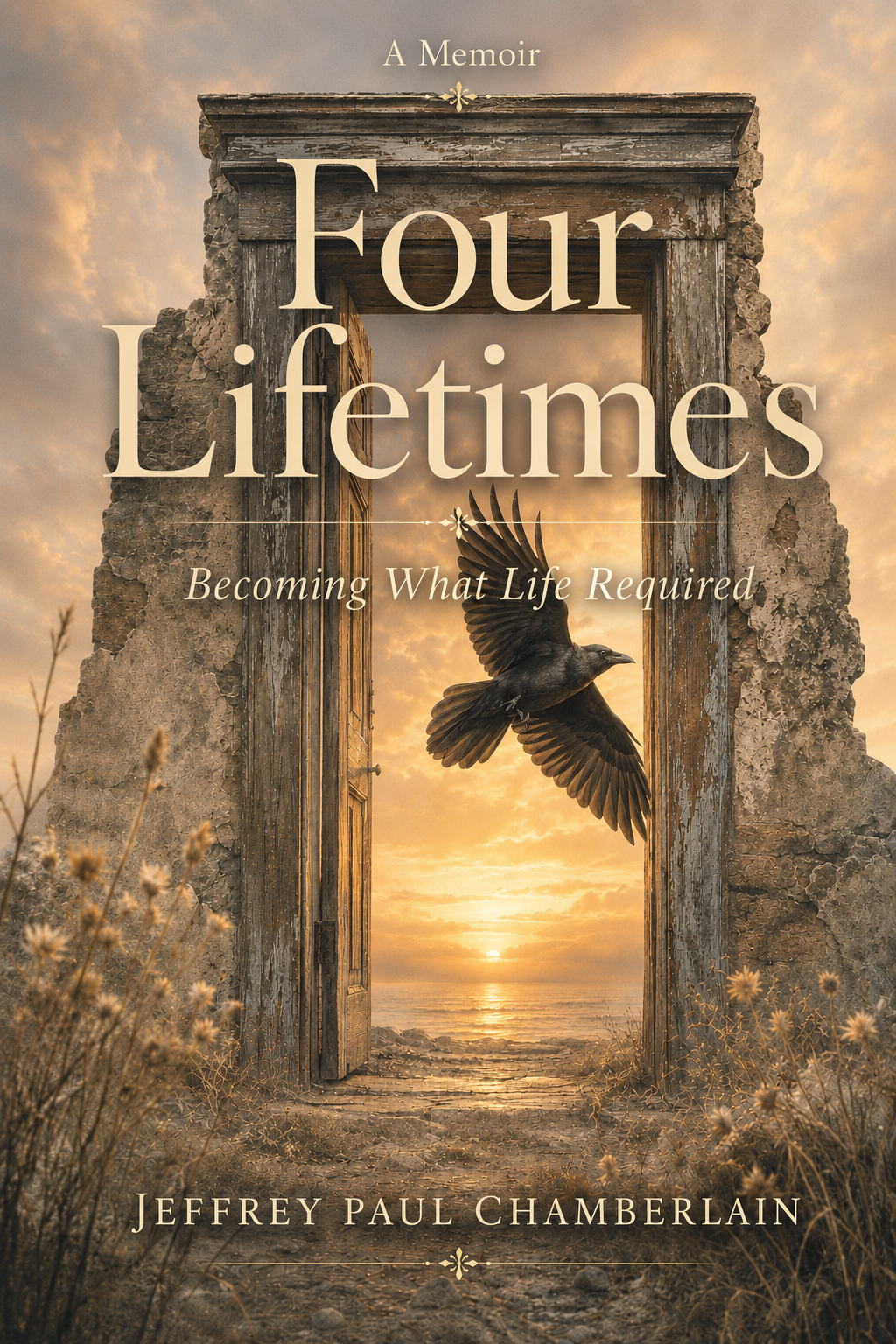
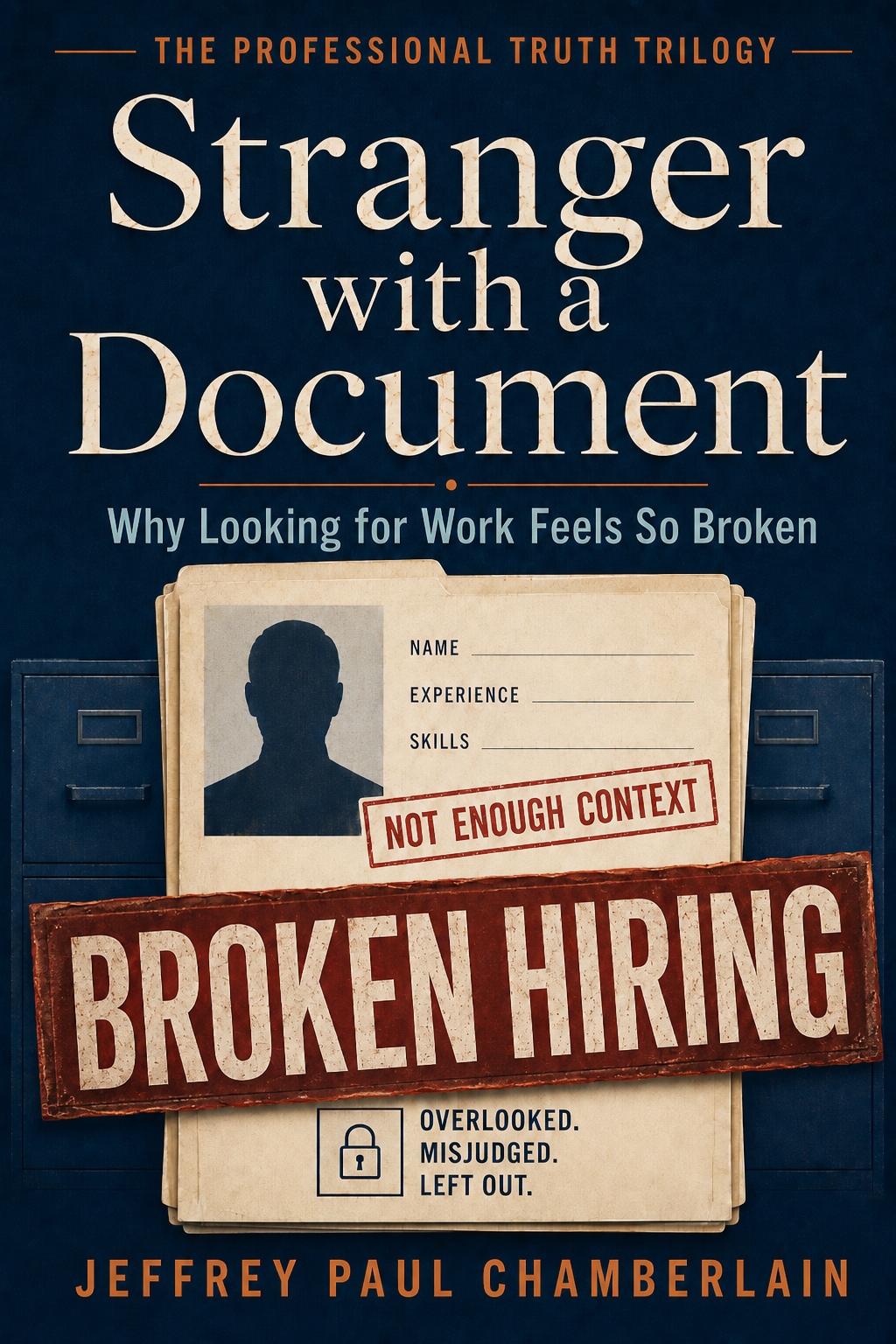
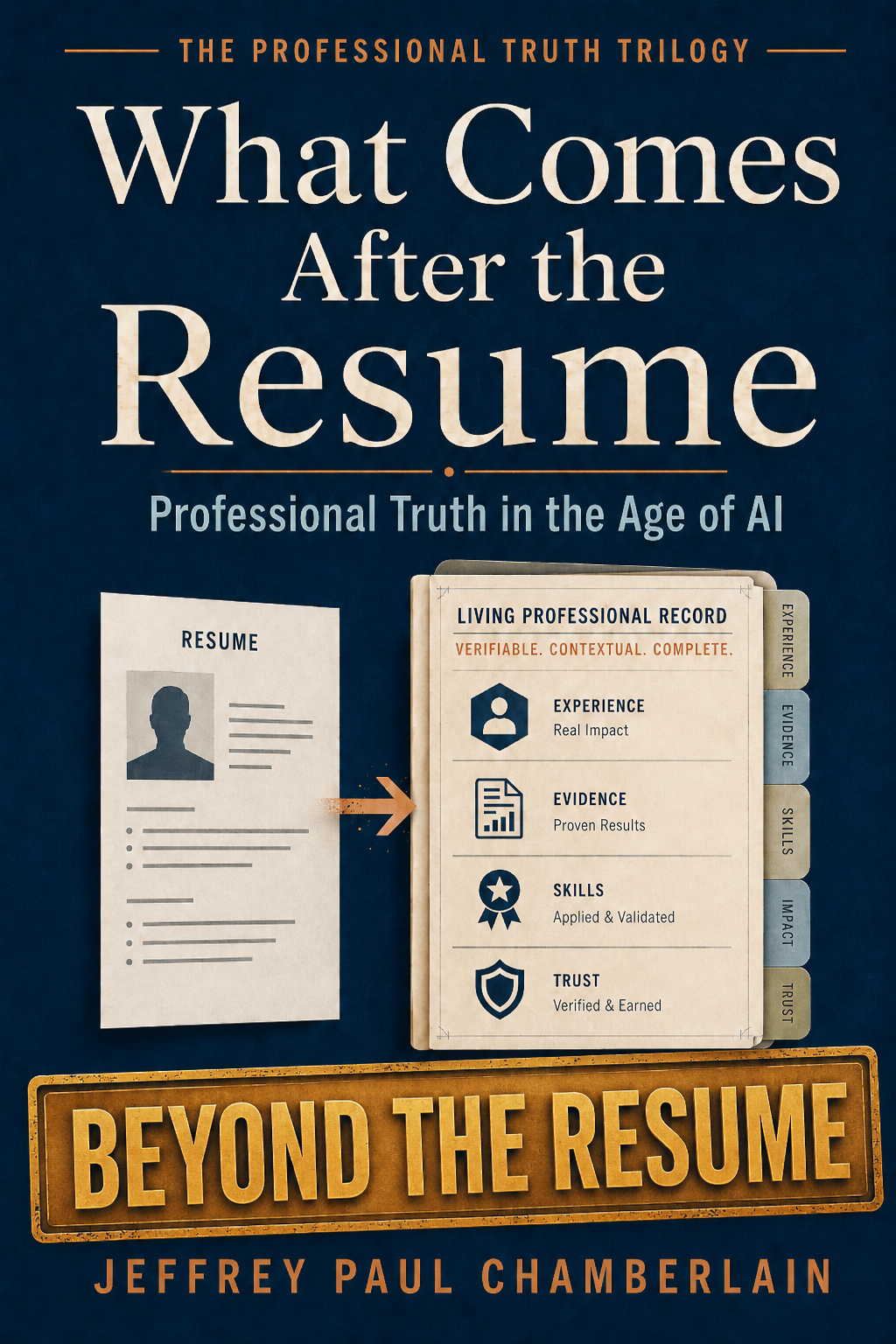
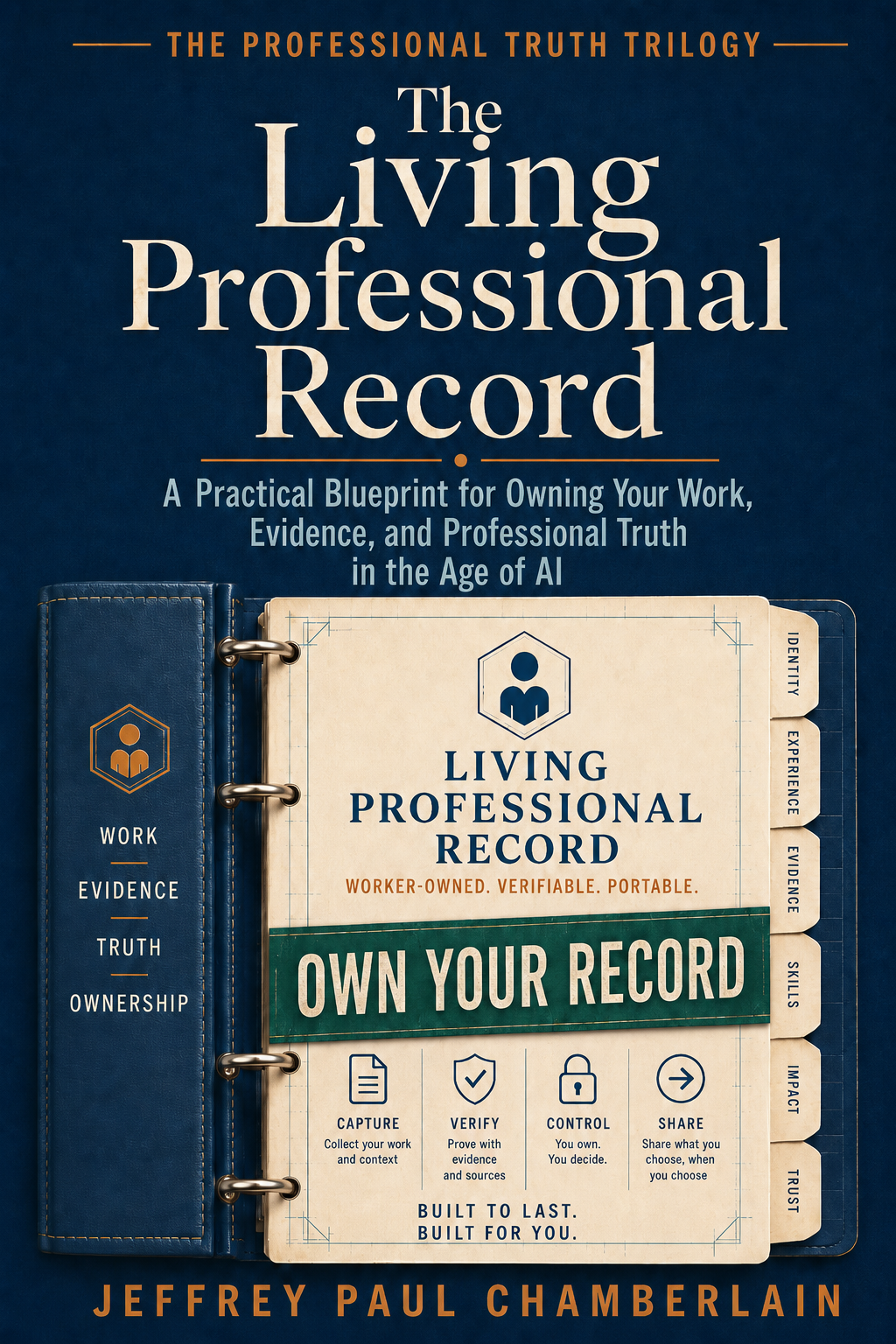
Select a cover to explore the books.
Four Lifetimes, a memoir · The Professional Truth Trilogy, three books
Stay Connected
For questions about the process, the toolkits, or how to use the Record Builder, the JPC Record Guide can usually help right away. For the books, speaking, interviews, or publishing-related conversations, contact Jeffrey directly.